Feeling bloated occasionally after a heavy meal is common. But if your stomach feels swollen, tight, or uncomfortably full almost every day, it may be worth looking beyond your diet. Persistent bloating causes can range from simple dietary habits to digestive disorders that require medical evaluation.
Bloating may feel like fullness, pressure, abdominal swelling, or excessive gas. Identifying the underlying cause is important, especially when bloating is persistent or occurs along with other digestive symptoms.
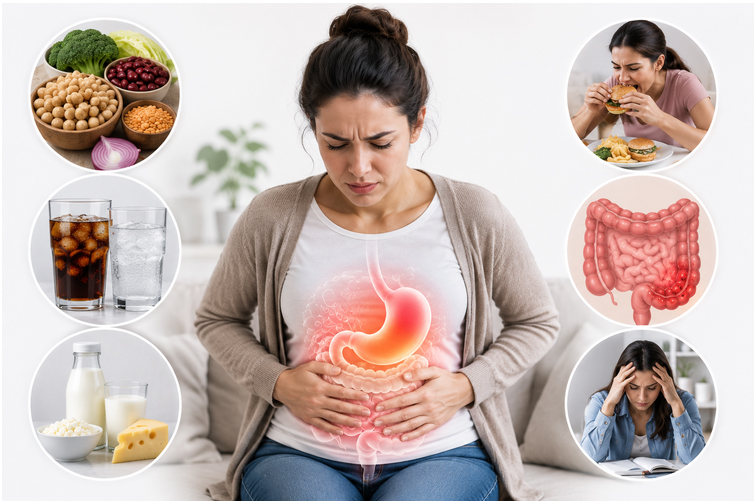
Several conditions and everyday habits can contribute to frequent bloating.
Eating quickly can cause you to swallow more air, which may lead to gas and abdominal distension. Large meals and eating late at night may also worsen bloating in some people.
Certain foods are more likely to cause gas, including beans, lentils, onions, cabbage, carbonated drinks, and some dairy products. Individual tolerance varies, so keeping track of foods that trigger symptoms can be helpful.
When stool builds up in the colon, it can make the abdomen feel swollen and uncomfortable. Constipation is therefore one of the commonly overlooked persistent bloating causes.
Some people have difficulty digesting lactose, the sugar found in milk and dairy products. Other food intolerances can also be a cause.
Irritable bowel syndrome (IBS) is a common digestive disorder associated with bloating, abdominal discomfort, constipation, diarrhoea, or alternating bowel habits. Symptoms may come and go and can sometimes be triggered by certain foods or stress.
Bloating can sometimes occur alongside conditions such as acid reflux, indigestion, or other gastrointestinal disorders.
Most cases of bloating are not caused by a serious disease. However, persistent or unexplained bloating accompanied by other symptoms deserves medical attention.
Your doctor may begin by asking about your diet, bowel habits, medications, previous medical conditions, and the duration of your symptoms. A physical examination may be followed by blood tests, stool tests, ultrasound, CT scans, endoscopy, or other investigations when appropriate.
The right investigation depends on your symptoms and medical history. Treating the underlying condition is generally more effective than repeatedly taking medication for gas without identifying its cause.
Occasional bloating is usually not a cause for concern. Daily or persistent bloating, particularly when accompanied by weight loss, bleeding, pain, vomiting, or changes in bowel habits, warrants a proper medical evaluation.
Dr. Nishant Kurian, a Surgical Gastroenterologist and GI Oncosurgeon in New Delhi, specialises in the evaluation and surgical management of conditions affecting the digestive system, including gastrointestinal and colorectal diseases. If you are experiencing persistent bloating or other unexplained digestive symptoms, an expert evaluation can help determine the underlying cause and guide appropriate treatment.
Understanding the persistent bloating causes rather than repeatedly treating the symptom can be an important step towards better digestive health
This will close in 20 seconds
This will close in 0 seconds